Who Is at Fault? Texas' 51% Proportionate Responsibility Rule and Motorcycle Crashes
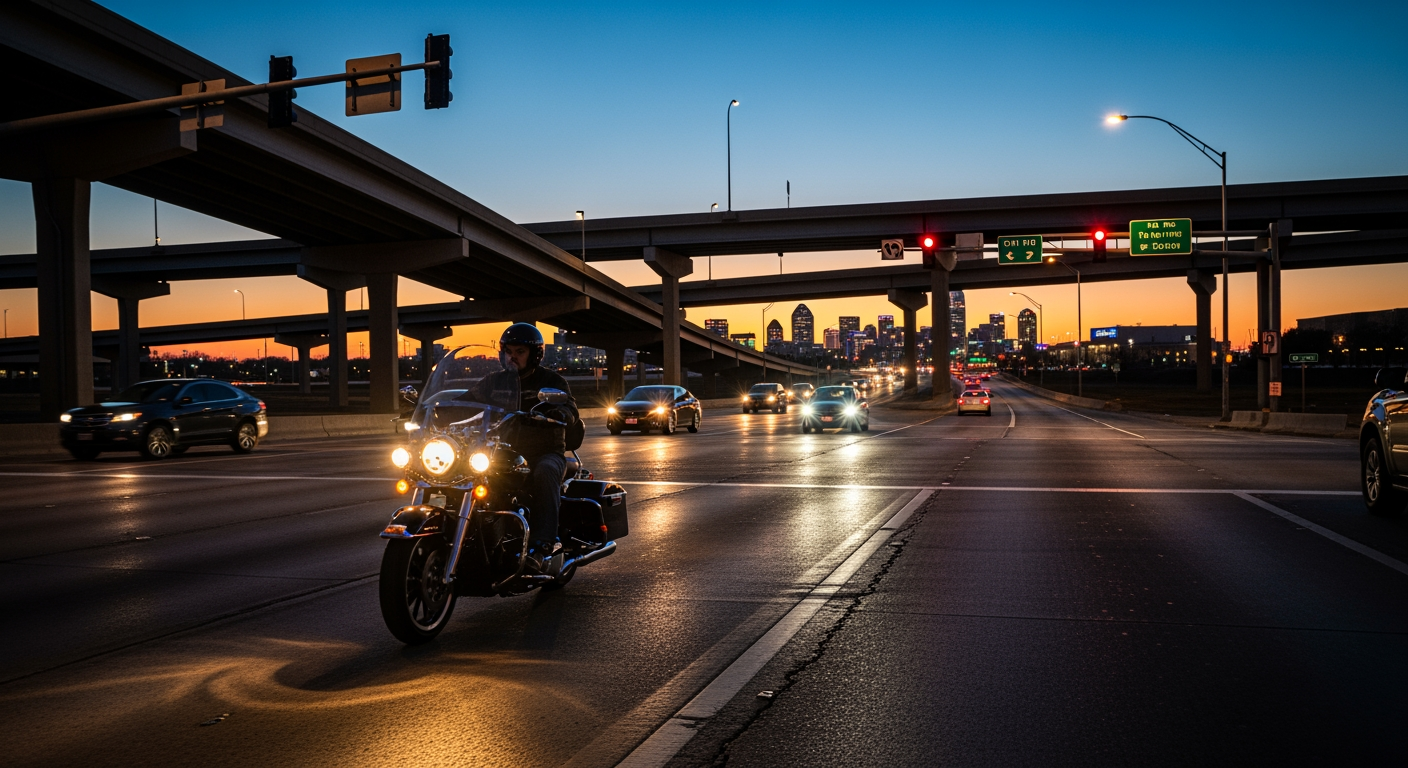
You went down on the Dallas North Tollway, or got left-hooked at an intersection in Fort Worth, or somebody changed lanes into you near Denton like you were invisible. Now the other driver's insurance company is on the phone, and the first thing they want to do is pin part of the blame on you. That is not an accident. In Texas, the fight over who is at fault is the whole ballgame, and there is one rule that decides how much money you walk away with. Riders call it a lot of things. The law calls it proportionate responsibility, and the magic number is 51 percent.
If you ride in the DFW metroplex, you need to understand this rule before you ever sign anything or give a recorded statement. Here is the straight talk, rider to rider.
What Proportionate Responsibility Actually Means
Texas uses what lawyers call modified comparative negligence. In plain English, more than one person can share the blame for a crash, and the percentages have to add up to 100. Maybe a driver turned left in front of you and gets tagged with 80 percent of the fault. Maybe an investigation decides you were going a little hot and you pick up 20 percent. Your compensation then gets reduced by your share.
So if your damages add up to 100,000 dollars and you are found 20 percent at fault, you do not get the full amount. You get 80,000 dollars. That is the comparative part. It feels harsh, but it can still leave a rider with real money to cover medical bills, lost wages, and a totaled bike.
The 51 Percent Bar Is Where It Gets Brutal
Here is the part that catches people off guard. Texas does not just reduce your recovery. It has a cutoff. If you are found to be 51 percent or more at fault for the crash, you recover nothing. Zero. This is the 51 percent bar, and it is why insurance companies work so hard to push your fault number up.
Think about what that means. At 50 percent fault, you can still collect half of your damages. At 51 percent, you walk away with nothing at all. One single percentage point is the difference between a check and an empty hand. Adjusters know this math cold, and they will nudge, twist, and reinterpret every detail to get you across that line.
Why Riders Get Blamed Unfairly
Motorcyclists start every fault fight at a disadvantage. There is a stubborn bias out there that bikers are reckless, that we are all weaving and speeding, that if a rider went down it must have been the rider's fault. Insurance companies lean on that bias hard because it helps them shift blame and shrink payouts.
Some of the angles they use against DFW riders:
- Claiming you were speeding or lane splitting, even when the evidence does not support it.
- Arguing your gear or lack of a helmet somehow caused the crash, when it had nothing to do with how the collision happened.
- Suggesting you were hard to see, as if being on a motorcycle makes the crash partly your fault.
- Twisting a friendly recorded statement into an admission you never meant to make.
None of these automatically stick. But left unchallenged, each one is a tool to push your fault percentage toward that 51 percent wall.
The Helmet Question, Cleared Up
A lot of riders worry that not wearing a helmet wrecks their case. Let us set the record straight on Texas helmet law. Riders and passengers under 21 are required to wear a helmet, period. Riders 21 and older are exempt if they have completed an approved motorcycle safety course or carry health insurance coverage.
Just as important, whether you had a helmet on usually has nothing to do with who caused the crash. If a driver ran a red light and hit you, the driver caused the crash whether you were wearing a brain bucket or not. Helmet status can come up in arguments about the extent of head injuries, but it does not turn a driver's mistake into your fault for the collision itself.
Texas Insurance Minimums and Why They Matter
Knowing the fault rule is only half the picture. The other half is whether there is enough insurance to actually pay you. Texas requires drivers to carry minimum liability coverage of 30/60/25. That breaks down to 30,000 dollars for injury to one person, 60,000 dollars for injuries per accident, and 25,000 dollars for property damage.
Here is the hard truth. Those minimums are thin. A serious motorcycle crash can blow past 30,000 dollars in medical bills before you leave the hospital. That is exactly why uninsured and underinsured motorist coverage on your own policy matters so much, and why establishing the other driver's fault clearly is so important. The less fault that lands on you, the more of the available coverage you can reach.
You Have Two Years, So Do Not Sit On It
Texas gives you a two year statute of limitations on personal injury claims. That clock starts running on the date of the crash. Miss it, and the courthouse door closes no matter how strong your case was.
Two years can feel like a long time when you are healing and dealing with the daily grind. It is not. Evidence fades. Skid marks get rained away. Witnesses forget what they saw or move out of the area. Camera footage gets overwritten. The sooner the facts are locked down, the harder it is for an insurance company to rewrite the story and bump up your share of the blame.
How to Protect Your Fault Percentage After a Crash
Because everything hinges on those percentages, what you do in the days after a wreck can swing your case. A few things that help:
- Get the crash documented by police and make sure your version is on the record.
- Photograph the scene, your bike, the other vehicle, the road, and your injuries.
- Get names and numbers for any witnesses before they scatter.
- Get medical attention and follow through on treatment, so the injuries are tied to the crash.
- Be careful with recorded statements. You are not required to give the other driver's insurer one, and a casual chat can be turned against you.
- Talk to a lawyer who understands motorcycle crashes before you accept any offer.
Where Diaz Law Firm Comes In
This is the stuff Manuel Diaz and the Diaz Law Firm deal with every day. The firm is an established Texas injury practice with offices in Dallas, Fort Worth, Denton, and San Antonio, founded by Manuel Diaz, a graduate of SMU School of Law. The firm is also a member of the National Academy of Motorcycle Injury Lawyers, a network focused on representing injured riders.
Fighting the fault percentage is a big part of protecting a rider's claim. Building the timeline, gathering the evidence, pushing back on the lazy biker bias, and keeping you on the right side of that 51 percent line is the work. If you are a rider in the DFW metroplex who got hurt and the blame game has already started, it costs nothing to get your questions answered.
Call Diaz Law Firm at (214) 800-2086 to talk through your situation.
This article is general information for Texas riders and is not legal advice. Reading it does not create an attorney-client relationship. Every case is different, so talk to a licensed attorney about your specific situation.